Bringing GFRP to the Forefront of Residential Concrete Construction
When most people think about fiberglass rebar (GFRP), they picture large-scale infrastructure: bridges, highways, marine structures.
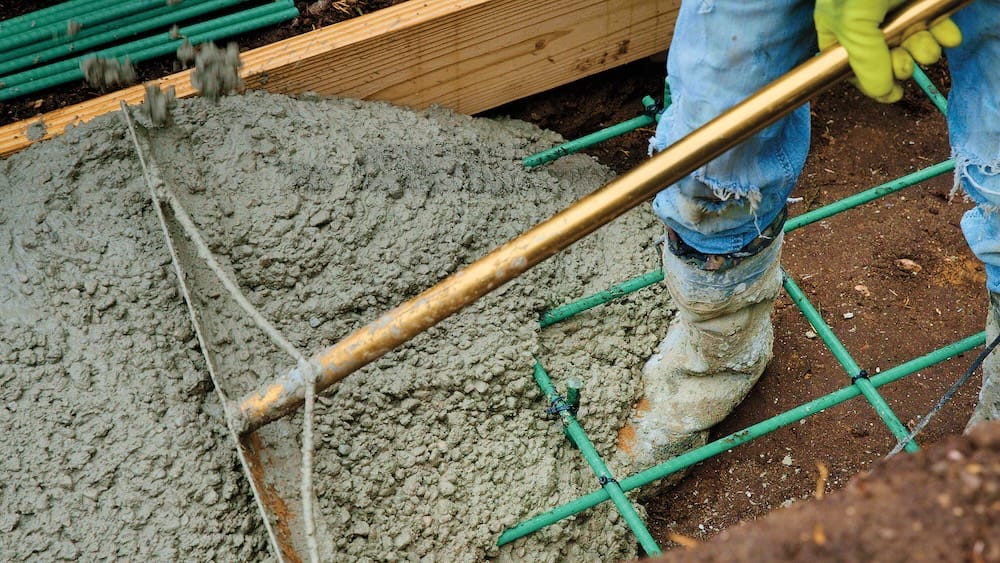
But the same material that has delivered decades of proven performance in demanding environments is also recognized for its value in residential and light commercial construction.
In the Summer 2025 issue of Concrete Facts Magazine, published by the Concrete Foundations Association (CFA), Danielle Kleinhans, Ph.D., P.E., Director of Engineering and Business Development at Mateenbar®, offers a technical, code-driven look at how GFRP fits into smaller-scale construction.
This application is fully supported by today’s codes, performance data, and product availability.
Why GFRP Is More Relevant Than Ever
Corrosion is one of the most persistent causes of concrete failure.
While DOTs and infrastructure owners have relied on GFRP for decades to eliminate rust-related deterioration, more construction professionals across all sectors are now considering it a go-to option.
That growing interest is backed by:
- Corrosion-Free Longevity – Eliminates steel rust, extending the service life of concrete
- Improved Handling – GFRP is significantly lighter than steel, reducing labor strain and transport cost
- Code Confidence – Supported by ASTM D7957, ACI 440, ACI 332, and ICC-ESR-5548
- Proven Global Performance – Used in infrastructure projects around the world for over 30 years
- Made in the USA & BABA Compliant – Meets Build America, Buy America (BABA) requirements for federally funded work
An Invitation to Think Differently
In an industry that values reliability and risk reduction, GFRP is not an emerging solution; it’s an established technology with a strong track record.
Mateenbar® has spent decades building global credibility, with a project footprint that spans continents and climates. From marine structures to desert highways, the performance data is already there.
Now, with products like Greenbar2X®, the same material advantages are being applied more broadly to residential and light commercial work: projects where durability, ease of use, and long-term cost savings matter just as much.
This is an opportunity to re-evaluate default material choices in concrete reinforcement.
If you’re a contractor, specifier, engineer, or code professional, ask yourself: Are you using the best tool for the job or just the most familiar one?
The codes are in place. The supply is ready. The performance is proven. If you’re ready to reduce corrosion risk and future-proof your concrete work, this article is a smart place to start.